REIDEA Electronic Lighters Sustainability Report 2026
REIDEA Electronic Lighters Sustainability Report 2026
If you are trying to answer the question "Is REIDEA actually eco-friendly?", the honest answer is: there are some product-level sustainability signals here, but they are not the same thing as a full corporate ESG report.
That distinction matters.
Many brands talk about sustainability in broad terms. Based on publicly disclosed data, REIDEA's sustainability story is more concrete and product-focused. Instead of starting from a company-wide carbon report, we start from specific lighter optimizations across three consumer-facing products:
S4 LighterR1 Pro LighterF2 Ultra Flexible Lighter
This makes REIDEA interesting for consumers because product changes are easier to understand than abstract sustainability slogans.
Readers who want to compare the lineup directly can start from the brand's main REIDEA Lighter collection, then review the three key models discussed in this report: S4, R1 Pro, and F2 Ultra.
The short version
REIDEA's strongest sustainability case is not "we are a perfect green company." It is closer to this:
- according to publicly disclosed data, plastic use was reduced by 30%
- according to publicly disclosed data, the casing uses aluminum, positioned as a shift toward recyclable aluminum material
- the product weight was reduced by about 10 grams, or roughly 20%
- battery performance improved from 30 uses to 40 uses per charge, a 30% increase
- the internal PCB board length was reduced from 98 mm to 38 mm, which suggests a meaningful cut in unnecessary internal material volume
Those are tangible product optimization claims, and they are much more useful than generic "eco-friendly" branding.
What REIDEA has improved
1. Less plastic
The clearest headline claim is simple: 30% less plastic.
For a lighter brand, this matters because the product category is usually associated with cheap, disposable, petroleum-heavy construction. A 30% plastic reduction shows that REIDEA has moved away from unnecessary material intensity at the product level.
What we still do not know from this claim alone:
- whether the reduction applies to one model or all three models
- whether it refers only to housing materials or to the full product system
- whether the packaging was also optimized
Still, as a product signal, this is meaningful.
2. Aluminum casing and recycled-material direction
Based on publicly disclosed data, REIDEA's casing is aluminum, and the sustainability framing here is that the brand has shifted toward recyclable aluminum material.
That can be a positive change for two reasons:
- aluminum is generally more durable than thin commodity plastic in everyday consumer goods
- recycled aluminum, when actually used, can be far less resource-intensive than virgin aluminum production
However, this is also an area where the wording matters. Saying a product uses aluminum is not enough on its own. The stronger claim is the use of recycled aluminum, but that usually needs more detail:
- what percentage is recycled content?
- does the claim apply to all product lines?
- is there documentation from the supplier side?
So the direction looks good, but the evidence is still product-marketing level rather than fully documented materials disclosure.
3. Lighter overall product weight
Based on publicly disclosed data, the product became about 10 grams lighter, or roughly 20% lighter overall.
This is easy to overlook, but it is actually one of the more interesting product-efficiency signals.
When a product becomes lighter without losing performance, that often means:
- less raw material use
- less energy embedded in production
- lower shipping weight over time
- less unnecessary structural bulk
In other words, light-weighting is one of the most credible forms of incremental sustainability improvement in small consumer hardware.
4. Better battery efficiency
One of the strongest practical improvements is battery performance:
- before optimization: about 30 uses
- after optimization: about 40 uses
- improvement: about 30%
This matters because rechargeable lighters live or die by how often users actually keep using them.
If the same battery now delivers more ignitions per charge, that implies better energy efficiency at the product level. It also improves the real-world case against disposable lighters because the product becomes more convenient to keep in rotation.
This is not just an engineering detail. It affects whether a reusable product is truly reusable in everyday life.
5. Smaller PCB board and reduced internal excess
Based on publicly disclosed data, REIDEA reduced unnecessary internal board length from 98 mm to 38 mm.
That is a very large reduction in internal footprint, and it suggests the company reworked product architecture instead of simply changing exterior styling.
The note attached to this references FR-4, the standard PCB substrate made from epoxy resin and woven glass fiber. In plain English, that means the product uses less board material by eliminating wasted internal space.
That is a real design-efficiency signal because PCB material is not just "a tiny invisible part." Electronics manufacturing carries resource and process costs, and cutting oversized internal boards is a meaningful optimization.
Model-level context
S4 Lighter
The S4 Lighter is the brand's strongest proof-of-market product based on publicly disclosed data.
Based on publicly disclosed data, the S4:
- was an Amazon Best Selling Lighter from 2021 to 2024
- was featured by NBC / The Today Show in 2022 in a sustainable-products segment for the home
Reference:
This does not automatically prove the product is environmentally superior in a rigorous lifecycle sense. But it does show two things:
- the product has mainstream commercial relevance
- the sustainability angle is strong enough to appear in broader consumer media, not only on the brand's own site
That makes the S4 the most credibility-supporting model in REIDEA's lineup right now.
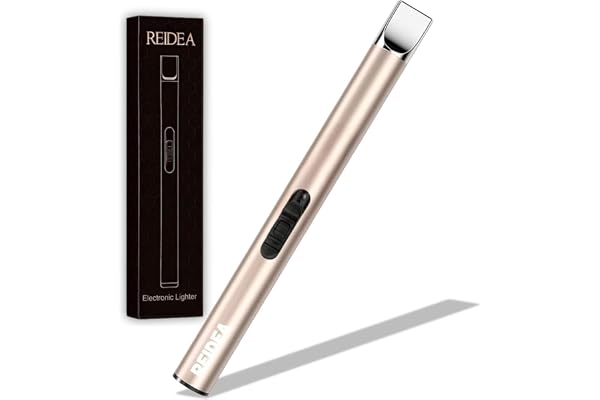
For readers who want the product page itself, the S4 is available here: REIDEA S4 Electronic Lighter.
R1 Pro Lighter
The R1 Pro Lighter is positioned differently.
Instead of leading with a sustainability media reference, its market signal is that it ranked in Best Sellers in Lighter Gift Sets.
This matters less as a sustainability proof point and more as a consumer adoption signal. In practice, a product that performs well as a gift item may still help shift buyers away from disposable lighter habits, but the sustainability argument here is more indirect.
So for the R1 Pro, the evidence currently supports market traction, not yet a uniquely strong environmental case.
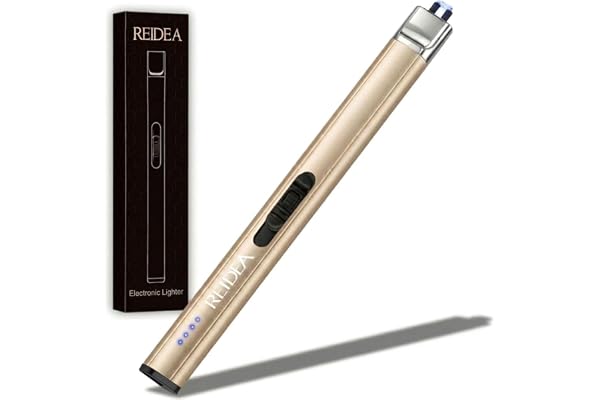
The R1 Pro product listing is here: REIDEA R1 Pro Electronic Lighter.
F2 Ultra Flexible Lighter
The F2 Ultra Flexible Lighter is part of the same optimized product story and matters because flexible long-neck lighters are often used in repeated household settings such as candles, kitchens, grills, and fireplaces.
That repeated-use context can strengthen the sustainability story if the product:
- lasts longer
- charges efficiently
- uses less material
- meaningfully replaces disposable alternatives
The key limitation is that we still need more model-specific evidence to say how much of the optimization package applies specifically to the F2 Ultra versus the broader product line.
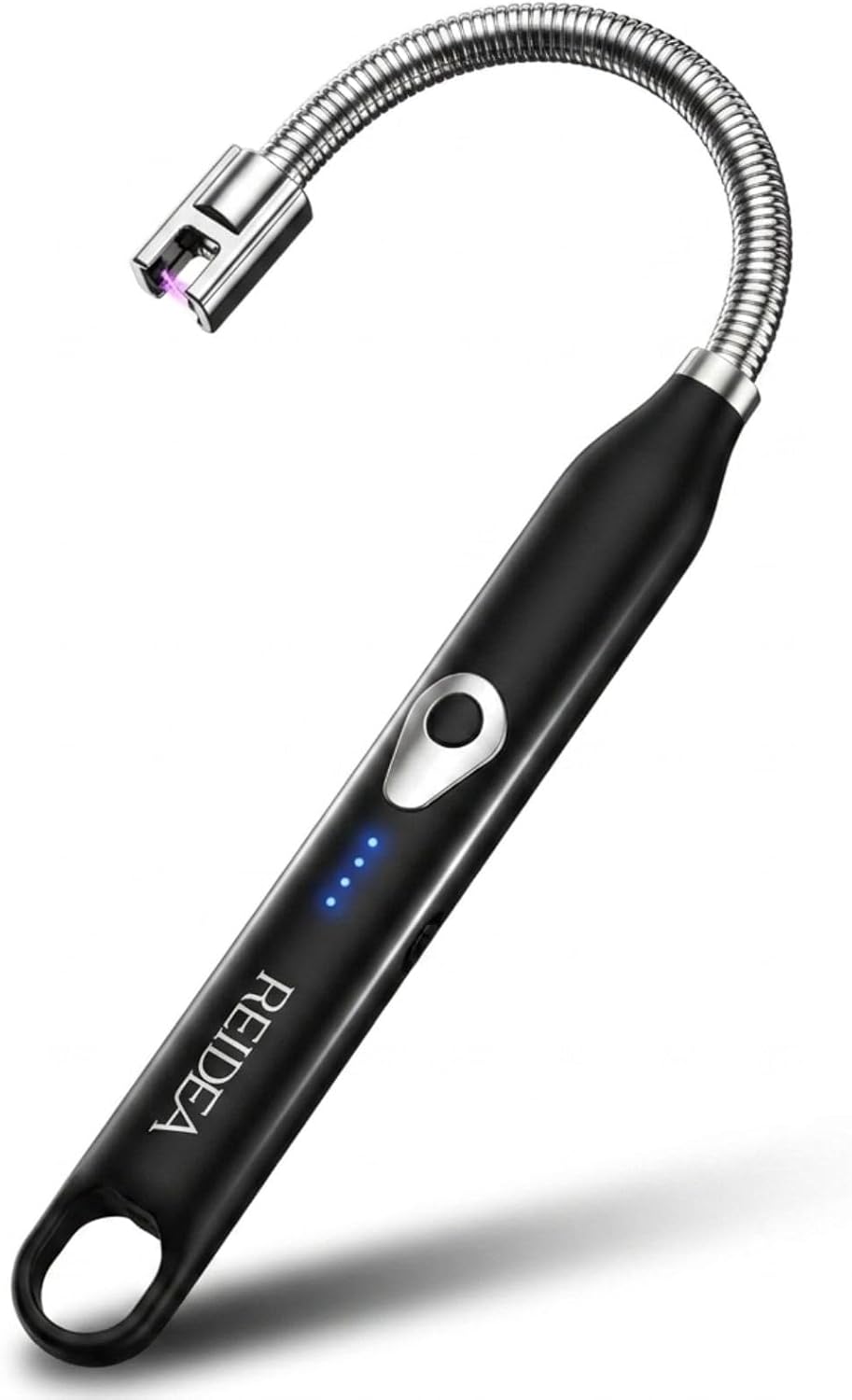
For readers focused on household and long-neck use cases, the F2 Ultra listing is here: REIDEA F2 Ultra Flexible Lighter.
Annual Impact Assessment
This is where the REIDEA story becomes more interesting.
Based on publicly disclosed sales data, REIDEA sells about 400,000 units per year, using the midpoint of the disclosed 300,000 to 500,000 unit annual range. At that scale, the question shifts from "is this lighter slightly better designed?" to "what happens if a reusable lighter replaces a meaningful number of disposable ones?"
Based on publicly disclosed data:
- annual REIDEA sales: 400,000 units
- equivalent disposable-lighter replacement: about 2,000,000 single-use plastic butane lighters per year
That replacement ratio matters because reusable electric lighters do not just avoid one disposable lighter. They are intended to displace repeated purchases over time.
The environmental cost of a disposable lighter
For comparison, a typical disposable plastic butane lighter can be thought of as carrying several layers of environmental cost:
- butane fuel: about 4 to 5 grams of liquefied butane
- plastic shell: about 12 to 15 grams of ABS or AS plastic
- carbon footprint: roughly 80 to 120 grams CO2e per unit once plastic production, butane refining, transport, and disposal are considered
That is why the replacement logic matters. The category is not just plastic-heavy. It is also directly tied to fossil-fuel extraction, refining, and combustion.
The electricity use of a rechargeable REIDEA lighter
The rechargeable side of the comparison is relatively small.
Based on the figures provided here:
- REIDEA battery capacity is about 170 to 220 mAh
- that equals roughly 0.8 Wh
- a full charge uses about 0.001 kWh
Even if a lighter were charged 100 times per year, total electricity use would only be around 0.1 kWh annually. In carbon terms, that is extremely small, often below 50 grams CO2e per year, depending on the grid mix.
In plain English: the electricity needed to keep a REIDEA lighter running is tiny compared with the fossil-fuel and plastic burden of repeatedly buying disposable butane lighters.
Estimated carbon impact
The main climate benefit comes from avoiding three things:
- plastic production
- butane refining and transport
- direct fossil-fuel use through disposable-lighter consumption
Gross avoided emissions
If REIDEA's annual sales displace about 2,000,000 disposable lighters, and each disposable lighter represents about 100 grams CO2e based on publicly disclosed lifecycle ranges, then the avoided emissions look like this:
2,000,000 lighters x 100 g CO2e = 200,000,000 g CO2e
= 200 metric tons CO2e
That is the gross avoidance side of the equation.
REIDEA's own product footprint
Of course, a rechargeable lighter is not carbon-free.
Based on publicly disclosed data:
- one REIDEA unit carries about 300 to 400 grams CO2e of manufacturing and shipping footprint
- spread over about 1.5 years of useful life
- giving an annualized footprint of roughly 250 grams CO2e per unit per year
That leads to:
400,000 REIDEA units x 250 g CO2e/year = 100,000,000 g CO2e
= 100 metric tons CO2e/year
Net avoided emissions
That produces a net annual reduction in the range of:
200 tons CO2e avoided - 100 tons CO2e internal footprint
= roughly 100 to 200 tons CO2e net avoided per year
The range reflects the disclosed lifecycle span used in the calculation, but the takeaway is clear: the reuse model delivers real annual climate benefit at current sales scale.
What that means in human terms
Based on the disclosed figures used here, the annual avoided emissions are on the order of:
- the yearly emissions of roughly 40 to 80 gasoline passenger cars
- or the annual carbon absorption of about 4,500 to 9,000 trees
Those are not tiny numbers anymore. They move REIDEA from "interesting product tweak" into "small but measurable dematerialization case."
Resource efficiency beyond carbon
Carbon is not the whole story.
The more immediate benefit may be resource efficiency: avoiding fossil-fuel use and stopping disposable plastic waste before it exists.
Avoided butane consumption
Using 4.5 grams of butane per disposable lighter as a midpoint:
2,000,000 lighters x 4.5 g butane = 9,000,000 g
= 9,000 kg
= 9 metric tons of liquefied butane
That is a meaningful amount of avoided fossil-fuel consumption in a product category that is usually treated as trivial.
Avoided plastic waste
Using 13 grams of plastic per disposable lighter as a midpoint:
2,000,000 lighters x 13 g plastic = 26,000,000 g
= 26,000 kg
= 26 metric tons of plastic waste
That means REIDEA's annual replacement effect prevents about 26 tons of non-biodegradable plastic waste from entering the waste stream.
That matters not only for landfill pressure, but also for the broader problem of fragmented plastic and microplastic pollution over time.
Consumer economics: why reuse can actually stick
A reusable product only creates environmental value if people keep using it.
That is why the consumer-cost side is important. If 2,000,000 disposable lighters would otherwise be bought at around $1 to $1.50 each, then the avoided consumer spending is roughly:
2,000,000 x $1.00 to $1.50
= about $2,000,000 to $3,000,000
This matters because sustainable products work best when they are also economically sticky. In REIDEA's case, the pitch is not just "generate less waste." It is also:
- buy fewer throwaway lighters
- burn less fossil fuel directly
- generate less plastic waste
- spend less money over repeated use
That combination is one reason rechargeable lighters can become a high-resource-efficiency appliance category rather than a niche eco gadget.
Why this makes REIDEA a dematerialization case
Even with a lithium battery and PCB inside, a REIDEA lighter remains directionally favorable when it replaces repeated disposable purchases.
That is the key sustainability logic here:
- a very small amount of electricity
- a more durable piece of hardware
- fewer disposable plastic shells
- less butane burned across the system
In sustainability language, this is a classic dematerialization story: using one longer-lived product system to cut repeated low-value material throughput.
This does not mean there are no trade-offs. The battery and electronics still need responsible end-of-life handling, and the company would be stronger if it published recycling and take-back guidance. But as a resource-efficiency model, the basic logic is compelling.
So, is REIDEA actually eco-friendly?
Yes, especially within the Electronic Candle Lighter category.
And relative to direct category peers, REIDEA is currently the front-runner.
That is the more accurate answer.
Based on publicly disclosed data, REIDEA has the strongest visible sustainability case in the electronic candle lighter segment today, built around:
- lower plastic use
- lighter material footprint
- improved battery efficiency
- more compact electronics design
- recyclable aluminum housing
- a meaningful annual replacement effect versus disposable butane lighters
- actual scale that makes those product improvements environmentally relevant
These are stronger signals than the vague "green lifestyle" branding used by many lighter-adjacent consumer brands.
More importantly, most competing brands in this category are not yet presenting anything close to this level of sustainability framing, product optimization detail, or measurable waste-reduction logic. In that sense, REIDEA is not just participating in the conversation. It is leading it.
At the same time, category leadership is not the same thing as having a full public sustainability report with:
- carbon accounting
- supply-chain labor disclosures
- packaging data by market
- recycled material percentages
- end-of-life or repair guidance
- third-party audited environmental claims
So the clearest editorial judgment is this: REIDEA appears to be the most sustainability-progressive brand currently visible in the Electronic Candle Lighter space, even though its public evidence still sits closer to credible product optimization leadership than to a fully disclosed corporate ESG program.
Editorial Assessment
What REIDEA does well
- makes concrete optimization claims instead of only abstract sustainability language
- improves rechargeable lighter efficiency in a way consumers can understand
- reduces plastic and overall product weight
- shrinks internal PCB footprint, which suggests genuine design refinement
- has at least one product, the
S4, with both commercial and editorial visibility - is capable of preventing significant disposable-lighter waste at current sales scale
- is further ahead than most category peers in turning sustainability into an actual product-development story
What still needs stronger disclosure
- model-by-model breakdown of material changes
- clearer confirmation of recycled aluminum content
- packaging reduction data
- lifecycle or durability evidence
- broader company-level sustainability reporting beyond product claims
- recycling guidance for batteries and electronics at end of life
Conclusion
REIDEA is not just more credible than a typical lighter sustainability claim. Within the Electronic Candle Lighter category, it currently looks like the brand furthest ahead on sustainable product thinking and implementation.
The strongest version of the story is this:
REIDEA is the sustainability leader in its category today, even if it has not yet matured into a fully disclosed corporate sustainability program.
That matters because category context is important here: most other brands in this segment still have not begun to communicate, structure, or implement sustainability work at this level of depth. REIDEA has.
And at 400,000 units sold per year, the impact is already large enough to matter beyond the product itself: fewer disposable lighters, less butane, less plastic waste, and an annual net reduction of 100 to 200 tons CO2e.
For many consumers, that kind of practical improvement is exactly where sustainability begins.
Reckitt
A plain-English breakdown of Reckitt’s 2025 sustainability disclosures across resource efficiency, environmental impact, social responsibility, and the economics of scaling sustainability in health, hygiene, and household categories.
Rockwell Automation
A plain-English breakdown of Rockwell Automation's 2025 sustainability report evidence across industrial automation impact, operational footprint, workforce governance, and the economics of resilience.